
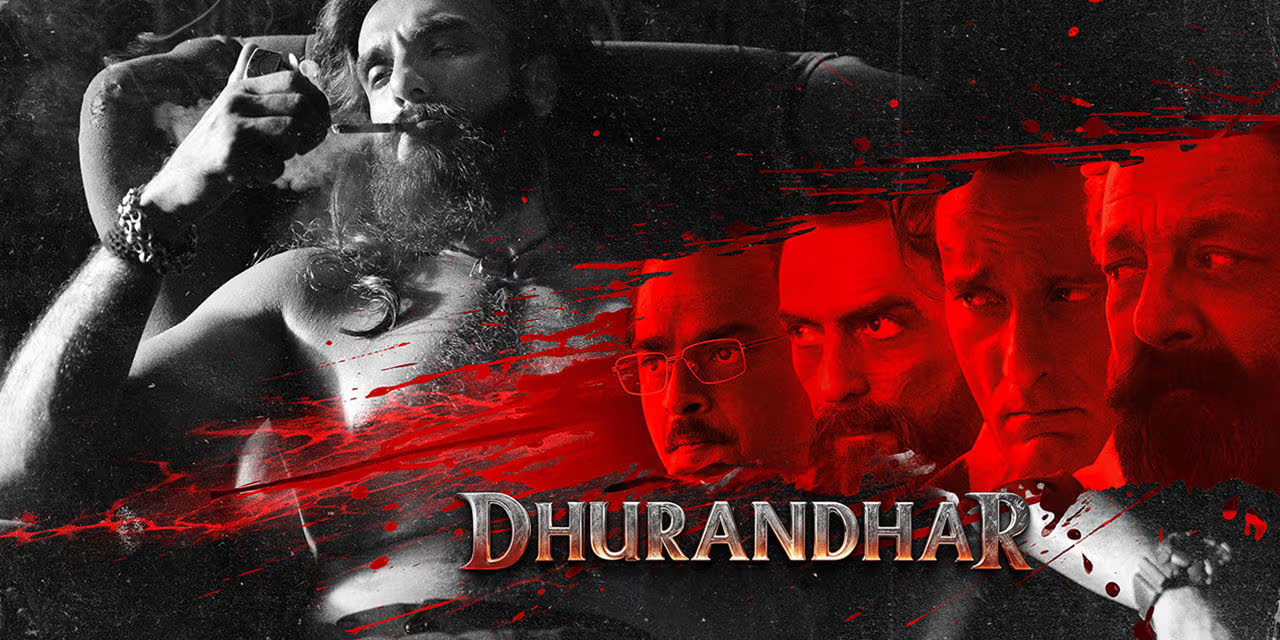
Director: Aditya Dhar
Runtime: 214 Minutes (3 Hours 34 Minutes)
Cast: Ranveer Singh, Akshaye Khanna, R. Madhavan, Sanjay Dutt, Arjun Rampal, and Sara Arjun.
Rating: ⭐⭐⭐½ (3.5/5)
Aditya Dhar, the filmmaker who redefined the Indian war movie with Uri: The Surgical Strike, has returned to the silver screen with a project that is even more ambitious, complex, and controversial. Dhurandhar, a massive 214-minute spy epic, is not just a film; it is a meticulous exploration of the darker side of intelligence operations. While the Indian film industry has been saturated with “spy-verse” movies recently, Dhurandhar stands apart by choosing gritty realism over stylized action and complex character studies over simple heroism.
Contents
The Foundations of the Plot
The narrative begins in the early 2000s, a period marked by high tension and significant terrorist threats in India. Following the 2001 Parliament attack, the story introduces us to Ajay Sanyal (R. Madhavan), the visionary head of the Intelligence Bureau. Sanyal argues that traditional defensive strategies are no longer enough. He proposes a daring “Deep Asset” mission: sending an Indian operative to live and breathe within the heart of the enemy’s criminal ecosystem. This sets the stage for the introduction of Hamza Ali Mazari, played with a haunting intensity by Ranveer Singh.
The story follows Hamza’s infiltration into the Lyari district of Karachi, a place the film depicts as a lawless dark empire ruled by various mafia factions. Hamza’s goal is to get close to Rehman Daqayat Baloch (Akshaye Khanna), a ruthless leader whose power stretches from the streets of Karachi to the highest corridors of political influence. As the plot unfolds, the film explores how Hamza must navigate the violent friction between Rehman’s gang, the local police led by SP Chaudhary Aslam (Sanjay Dutt), and the manipulative oversight of foreign intelligence agencies.
A New Perspective on the “Enemy” Territory
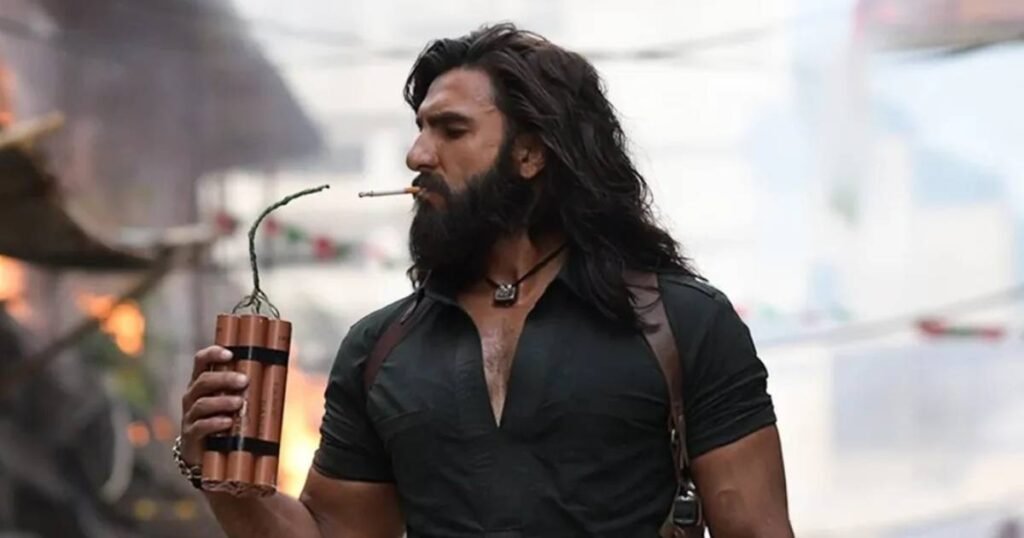
What makes Dhurandhar truly unique is its geographical and political focus. For the first time in Indian cinema, a director has attempted to show the internal decay and underworld dynamics of Pakistan in such granular detail. Aditya Dhar moves away from the cliché of showing a unified enemy; instead, he shows a fractured society where the mafia, the military, and the politicians are often at war with each other. By focusing on the Lyari underworld, the film gives us a look at “dark politics” and how terrorism is often fueled by local criminal empires. This depth adds a layer of authenticity that makes the stakes feel much higher than your average action flick.
The Power of Performance
While the film is marketed as a Ranveer Singh starrer, it is truly an ensemble masterpiece. Ranveer Singh delivers a restrained, internal performance that is a far cry from his usual energetic roles. He portrays a man slowly losing his soul to his cover story. However, it is Akshaye Khanna who provides the film’s most magnetic moments. As Rehman Daqayat, Khanna proves that silence is often more terrifying than shouting. His performance is one of pure “acting swag,” where a simple look or a slight tilt of the head conveys a world of menace.
Sanjay Dutt also shines as SP Chaudhary Aslam, bringing a raw, old-school toughness to the role. His character provides a sense of chaotic justice that balances the more calculated moves of the spies. R. Madhavan, as the architect of the mission, provides the intellectual backbone of the film, portraying the heavy burden of leadership and the moral cost of sending men into the “dark world.”
Technical Brilliance and the Challenge of Runtime
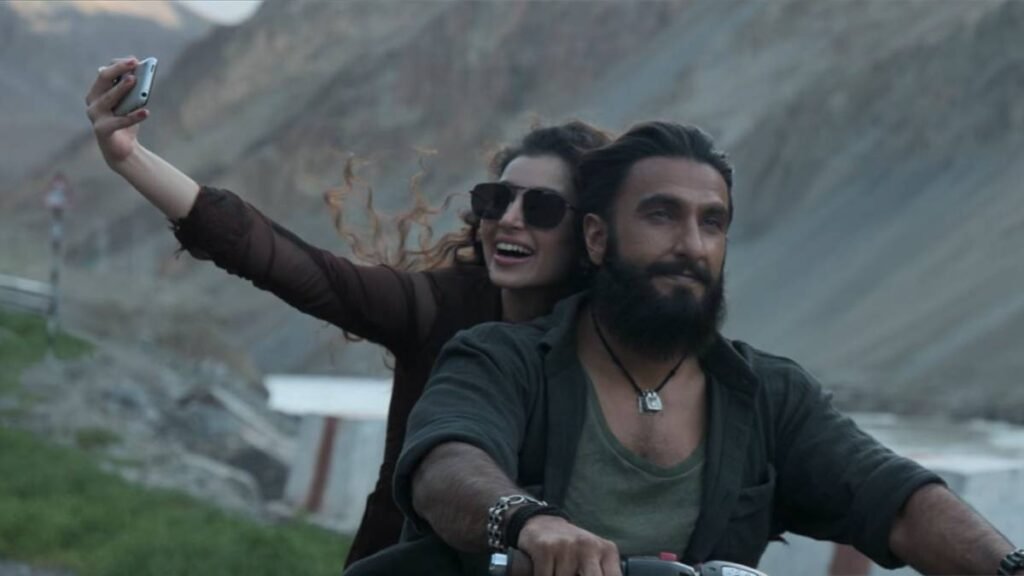
Technically, Dhurandhar is a triumph. The cinematography by Vikas Naulakha uses a dusty, desaturated palette that makes the screen feel hot and oppressive, perfectly mirroring the tension of the story. The music by Shashwat Sachdev is equally experimental. The decision to use iconic tracks like “Hawa Hawa” and “Rambha Ho” during brutal action sequences creates a jarring, almost surreal atmosphere that heightens the viewer’s discomfort and excitement.
However, the film’s greatest strength is also its biggest challenge: the runtime. At over three and a half hours, the movie demands absolute patience from the audience. There are moments where the pacing slows down significantly to focus on character background and atmospheric building. While some may find these “stretched” scenes tedious, they are essential for creating the feeling of a lived-in world. The film is also notably violent; the action choreography is “raw” and “unfiltered,” showing the bloody consequences of underworld warfare in a way that is not suitable for younger audiences.
Final Verdict: The First Half of a Legend
Ultimately, Dhurandhar is a film about goals. Every character—from the IB Chief to the Mafia Kingpin—has a clear, driving objective. The only missing piece is the full history of the hero, which Aditya Dhar has strategically saved for the second part of the story. Because we don’t yet know the hero’s full emotional “pain,” it can be difficult to fully connect with him in this first installment, but the action and the world-building more than compensate for this.
It is a film that refuses to give easy answers. It challenges the audience to look at the complexity of espionage and the thin line between a hero and a criminal. Despite its length, Dhurandhar is a significant achievement in Indian cinema and a must-watch for those who appreciate serious, high-stakes storytelling.
