
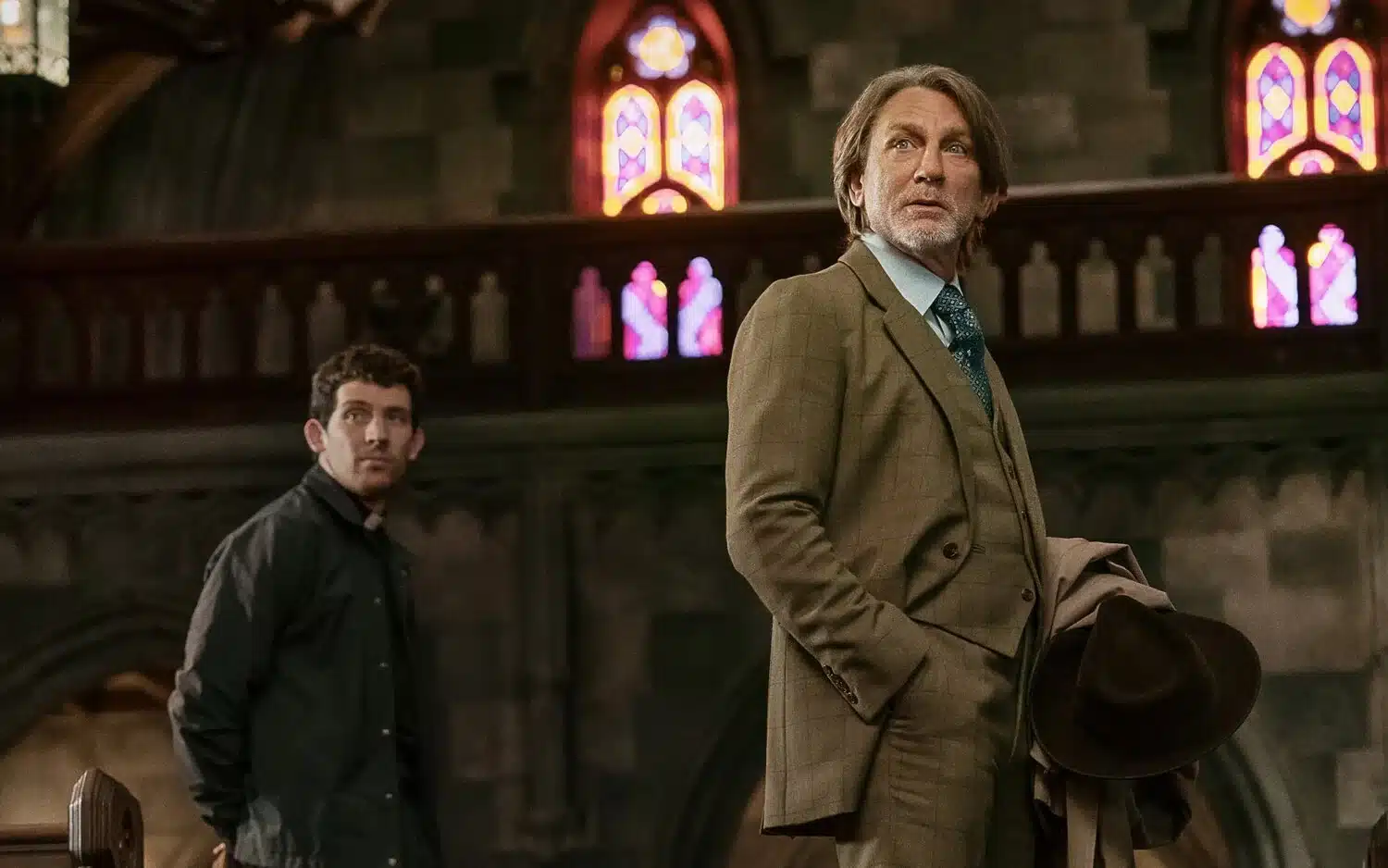
The comfort of a good mystery is unrivaled by fans of detective stories and impossible cases. Raymond Chandler, Agatha Christie, and Arthur Conan Doyle knew this well; these authors laid the foundations of an infallible genre that survives and continues to transform thanks to their followers and disciples, among them one of the most accomplished, Rian Johnson.
In 2019, the director of ‘ Brick ‘ and ‘ Star Wars: The Last Jedi ‘ surprised the world with ‘ Knives Out,’ an unexpected box office success that revitalized the whodunit genre with a highly personal and self-aware reinterpretation of crime stories. It introduced us to a new detective, Benoit Blanc (played by Daniel Craig at the height of his powers), who instantly became one of the most iconic figures in the genre.
Read Also: ‘Avatar: Fire and Ash’ Movie Review – The extended version of ‘The Way of Water’
Since then, many have followed in his footsteps (and those of his predecessors) to shape what could be a small new golden age of the whodunit, developing in film and streaming in parallel with the rise of the cozy mystery in literature and traditional TV. Titles like ‘ Only Murders in the Building ‘, ‘ The House That Screamed ‘, ‘ The Afterparty ‘, and ‘ Poker Face ‘ (by Johnson himself) have ridden the wave, but Benoit Blanc remains king.
Now, after the explosive ‘ Knives Out: The Glass Onion, ‘ the second installment in the saga, Blanc returns with a third case, ‘Wake Up Dead Man: A Knives Out Mystery,’ also under the Netflix banner. This time, Johnson leaves behind the excess of the previous film, a case as fun as it was crazy and outlandish, to redirect the saga once again in a more sober context, but without losing an ounce of that playful air and razor-sharp sense of humor that characterizes it.
This time, Blanc faces a case with mystical undertones: the murder of a beloved and feared monsignor, which presents the detective with his most difficult and dangerous case to date. Josh O’Connor, playing a young priest with a dark past who arrives at the church to challenge its leader, heads the new collection of suspects—a diverse group of parishioners who, as usual, present different micro-stories that Johnson weaves together with great ingenuity.
The religious themes of ‘Wake Up Dead Man’ allow the screenwriter and director to construct a film about faith, the evolution of the Church, and the stories (or lies) we tell to maintain its facade. A sharp new tale of intertwined lives, it incorporates well-placed doses of social criticism and reflection on Catholicism in times of change, hypocrisy, and the extremes to which some will go to control society and influence the masses.
Read Also: ‘The Housemaid’ (2026) Movie Review: A Deliciously Twisty Thriller That Embraces Its Pulp
All of this, of course, is interwoven in a thousand-piece puzzle where, as usual, Johnson displays enviable skill in arranging the pieces and making them gradually fall into place. But not before making us dizzy with its twists, surprising (and often confusing) revelations, the occasional jump scare (more on that later), and sudden turns of the wheel that, in other hands, could easily lead to spectacular crashes.
‘Wake Up Dead Man’ relies on dialogue and narration, grabbing your attention from the very beginning, and then unloading a barrage of clues and information onto the viewer, demanding your full attention. Typical of the genre, really. If you buy into it (and if you watch it again, it’s because you’re more than ready for it), what Johnson offers here is over two hours—though it feels shorter—of twisted, nonstop fun, a ride where you can’t take your eyes off the screen.
While it’s true that Johnson tends to overcomplicate things, and you have to suspend your disbelief a little (but not much) at several points in the film, it’s all part of his game, and as such, we accept the rules and play along. Thus, with a once again sublime Daniel Craig leading the way, Johnson reminds us of the key to whodunits: what matters isn’t so much solving the case as having fun on the journey to that big reveal.
And that’s precisely what ‘Wake Up Dead Man’ achieves, without reaching the caricatured extremes of ‘Glass Onion,’ but without abandoning its comedic side, even flirting with horror during its visceral climax. In this sense, Johnson knows how to use jump scares and detours into the macabre with ease, whether to heighten the tension or to elicit laughter, creating a work that also comes very close to gothic horror. In other words, something completely different from what we’ve seen in the saga so far.
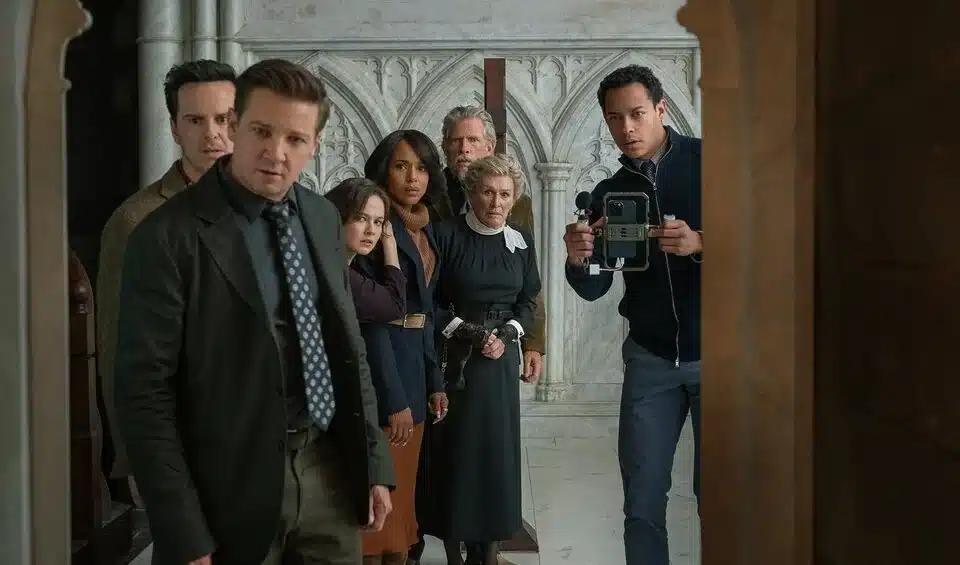
In the name of Josh, Glenn, and the other Josh
In terms of performance, Johnson and his casting team once again assemble an outstanding cast of suspects orbiting around a luminous Benoit. O’Connor is the undisputed star of the film, and as such, he shines brighter than anyone else, demonstrating enormous versatility in a very complete performance: humor, rage, vulnerability, strength, despair; he masterfully portrays every facet and phase of his character and reminds us why he is one of the most prominent actors of our time.
We must also applaud Josh Brolin, absolutely imposing in his animal magnetism as Monsignor Hicks, the victim; and a colossal Glenn Close, who gives her all once again, building a character of very measured excess in which the comic exaggeration is not at odds with the dramatic nuances: a new acting lesson from a lady who is already above it all and has nothing to prove.
Of the rest, Cailee Spaeny perhaps does the most with the least, clinging to her limited screen time, while the others fulfill their roles adequately (with some inevitably underutilized, as is the nature of the film). Craig, for his part, continues to delight us as Detective Blanc, as peculiar and charismatic as ever, but less unhinged, especially compared to the previous film.
He delivers some of the most inspired moments in Johnson’s script, particularly in its exploration of faith and miracles as opposed to the whodunit fantasy and impossible “locked-room” cases, to which it pays homage. However, beyond this moral and religious meditation, his character lacks development, remaining too static and trapped within the mystery itself, which so completely dominates this episode that it barely allows for digressions to expand his life beyond the confines of the case.
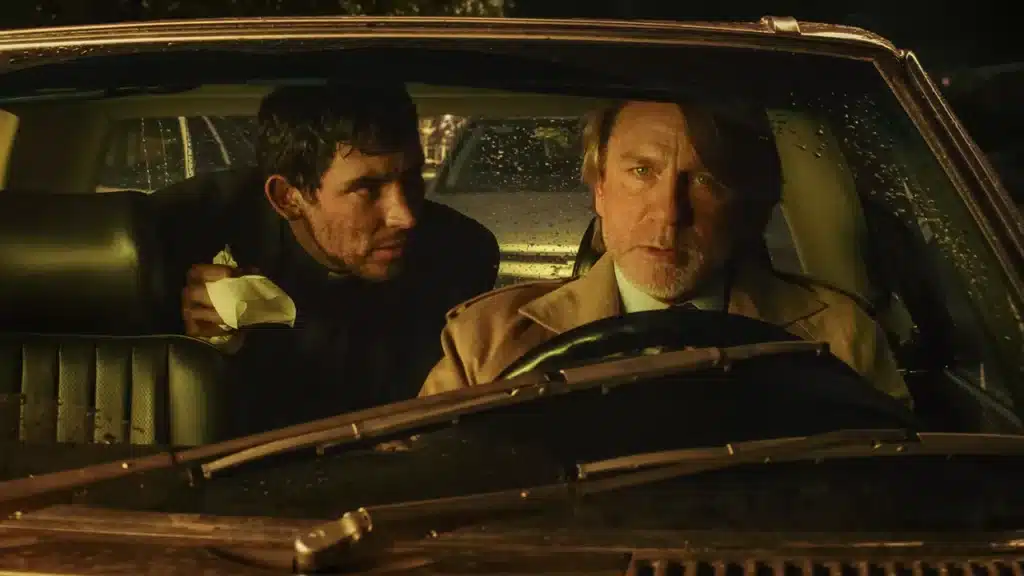
More Benoit, please
Although it clearly leans more towards the first installment than ‘Glass Onion’, Johnson deliberately goes to great lengths to orchestrate a mystery completely unlike anything seen in Blanc’s previous cases. And besides achieving this through the masterful script, which cleverly avoids formulaic plots and repetition, he delivers a precise and elegant piece of direction.
Its staging is full of creative moments and powerful impacts, but it’s also subtle and understated in its detail and symbolism, as demonstrated, for example, by the excellent metaphorical use of natural light and shadows bathing its characters in a single conversation. Furthermore, its narrative and structuring are very fluid, which is commendable considering the story’s twists and turns and time jumps, for which it skillfully employs every resource to enhance the pacing.
‘Wake Up Dead Man’ shines consistently as a dark comedy, with that devilishly perverse air running throughout the film and meta references that will bring a smile to more than one face (we’ll keep them to ourselves so as not to spoil the jokes). But it’s also Benoit Blanc’s darkest and most existential work to date, one not without satire, but appropriately transcendental, with which Johnson explores the possibilities of a saga that seems determined to continue demonstrating just how far it can go.
